
What Are Chevron Marine Lubricants?
A Complete Lubrication Solution for the Marine Industry
Introduction
Marine vessels operate in some of the most demanding conditions in the world. Engines run for long hours under heavy loads, gearboxes face constant mechanical stress, hydraulic systems must remain reliable at sea, and cooling systems need stable protection against corrosion and heat-related damage.
That is why marine lubrication is not simply about reducing friction. It is about protecting critical equipment, improving reliability, supporting fuel efficiency, reducing downtime and helping vessel operators comply with increasingly strict environmental and emission regulations.
Chevron Marine Lubricants is Chevron’s dedicated range of high-performance lubricants and technical services for the global shipping and marine industry. The portfolio is designed to support different vessel types, fuel strategies and onboard equipment, from slow-speed two-stroke main engines to medium-speed auxiliary engines, gearboxes, compressors, hydraulic systems, stern tubes and cooling water systems.
Why Marine Lubricants Are Critical for Vessel Operation
A ship is a complex mechanical system. Every major component depends on the correct lubricant to operate safely and efficiently. If the wrong oil is used, or if oil condition is not monitored properly, the consequences can include excessive wear, corrosion, deposits, overheating, poor efficiency, unplanned maintenance and expensive downtime.
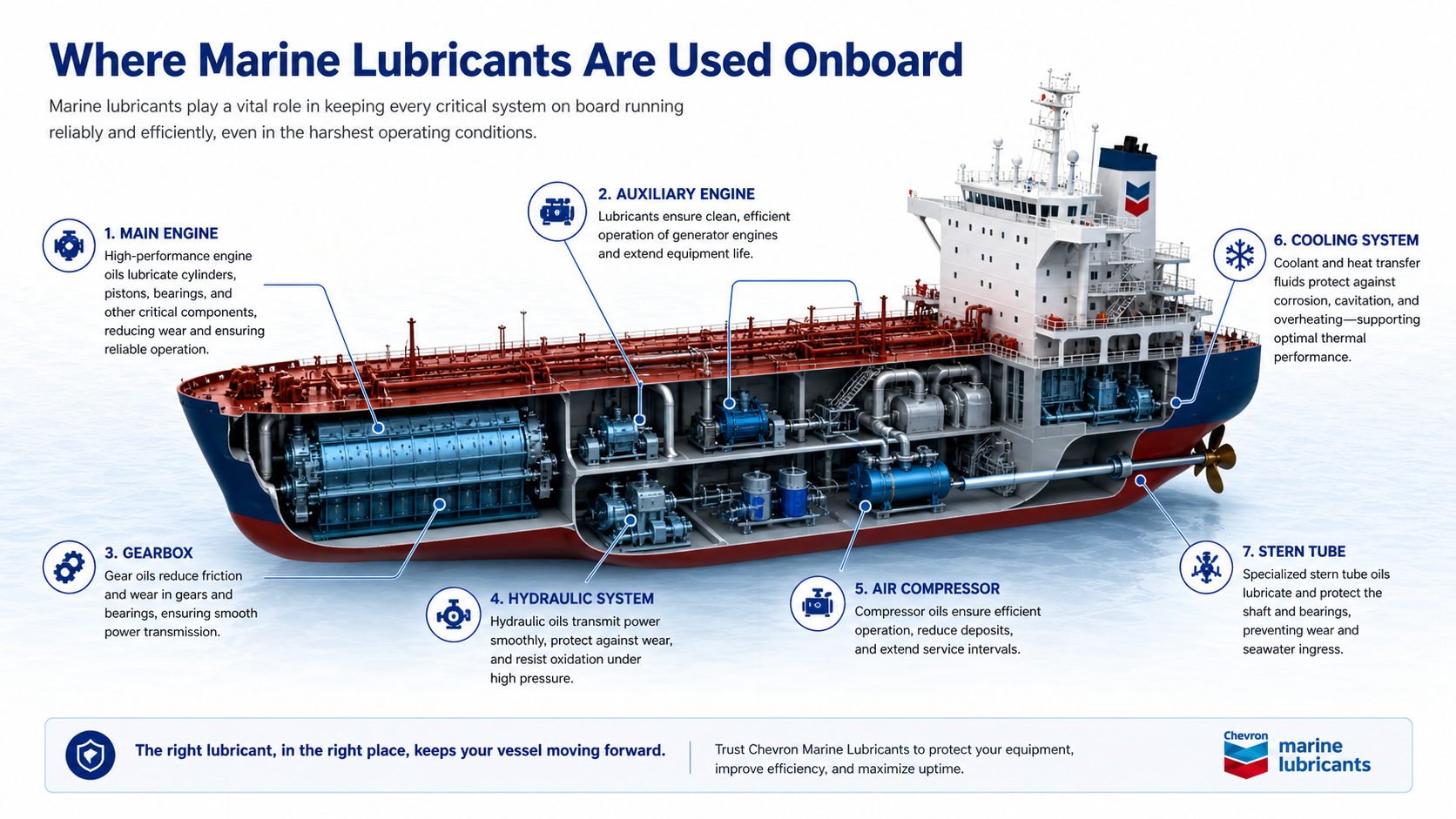
Marine lubricants perform several essential functions:
They form a protective oil film between moving metal surfaces.
They help reduce wear under high pressure and high temperature.
They neutralize acidic by-products from fuel combustion.
They help keep engines, pistons, bearings and gear surfaces clean.
They protect against rust, oxidation and corrosion.
They help transfer heat away from critical components.
They support longer equipment life and more predictable maintenance planning.
For shipowners and fleet managers, choosing the right lubricant is therefore a technical decision, not just a purchasing decision.
Chevron Marine Lubricants: Built for Today’s Changing Marine Industry
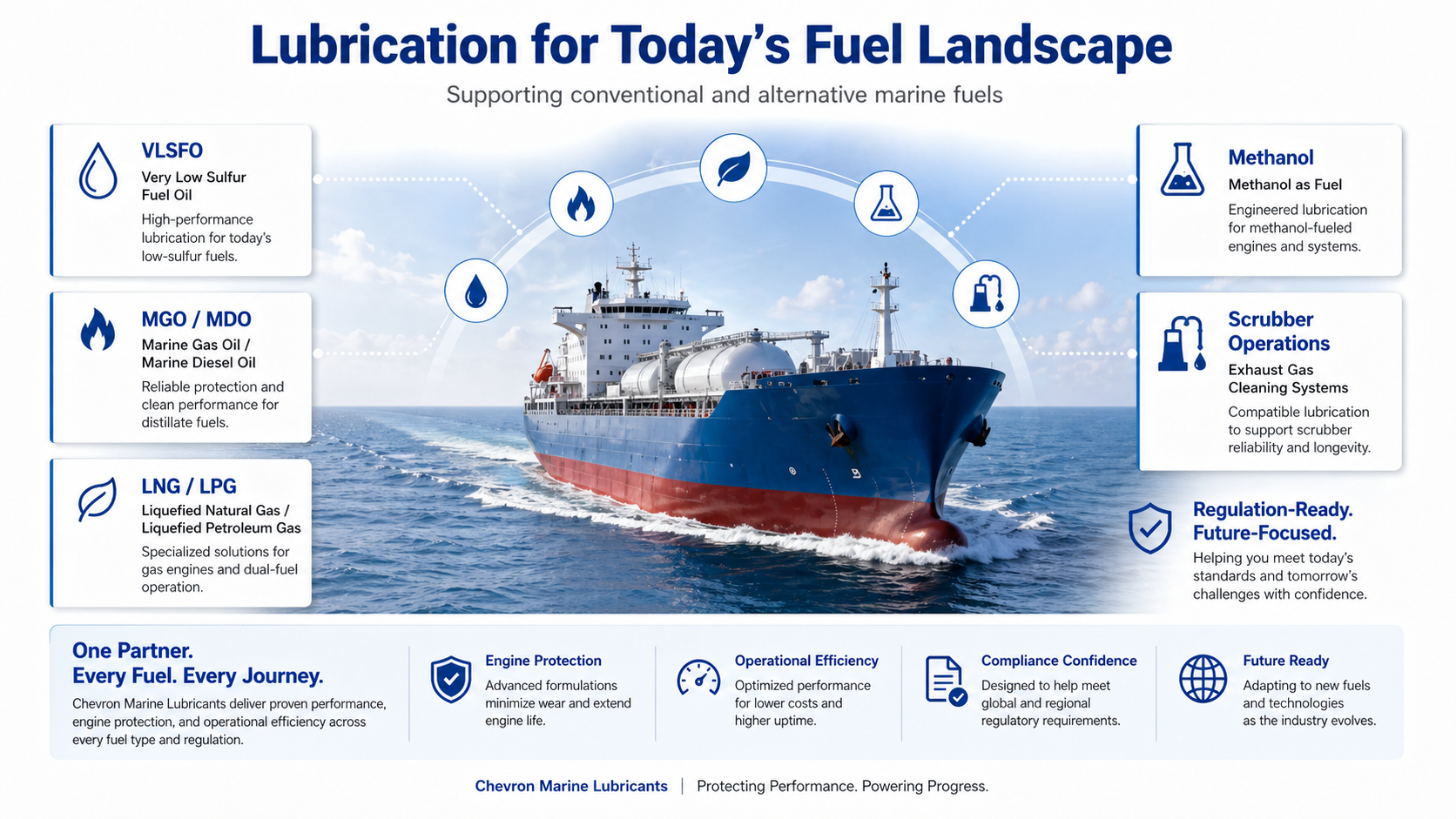
The marine industry is changing rapidly. Emission reduction targets, fuel sulphur limits, alternative fuels and engine technology developments are reshaping how vessels are operated.
Chevron Marine Lubricants are developed to support these operational changes. The product range covers vessels using traditional fuels as well as modern compliant fuel options such as:
Marine Gas Oil and Marine Diesel Oil, commonly known as MGO and MDO.
Very Low Sulphur Fuel Oil, commonly known as VLSFO.
High sulphur fuel used with exhaust gas cleaning systems or scrubbers.
LNG and LPG applications.
Methanol and other emerging alternative fuel pathways.
This flexibility is important because not all ships operate under the same fuel strategy. Some vessels run on low-sulphur fuels, some use scrubbers, some operate on LNG, and some are preparing for alternative fuels such as methanol, ammonia, biofuels or hydrogen. A strong marine lubricant program must match the vessel’s engine type, fuel type, OEM recommendation and operating conditions.
Main Product Categories in Chevron Marine Lubricants
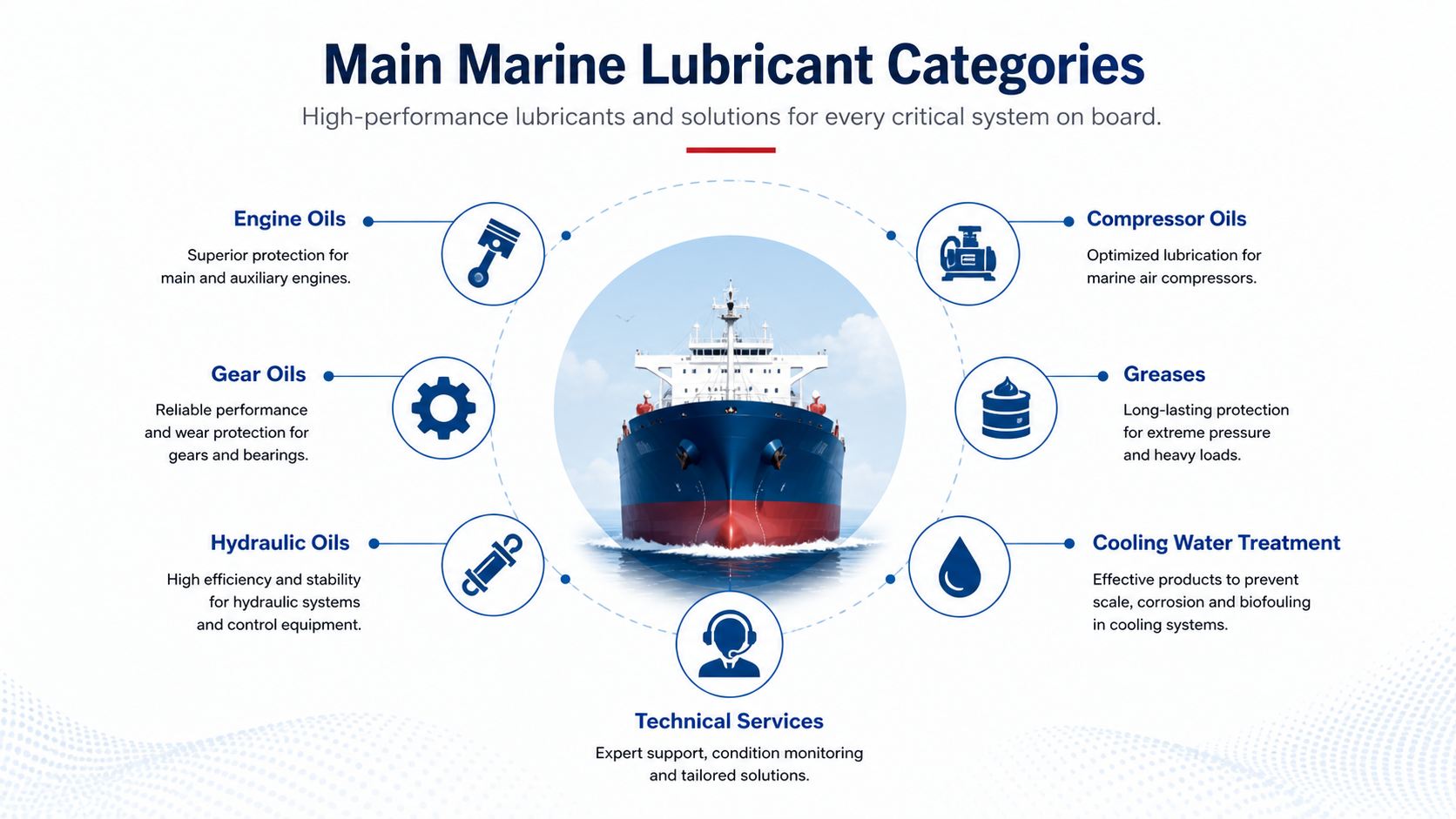
Chevron’s marine lubricant portfolio covers a wide range of onboard applications. The main categories include:
1. Marine Engine Oils
Marine engine oils are used in main engines and auxiliary engines. Chevron offers solutions for both slow-speed two-stroke engines and medium-speed or high-speed four-stroke engines.
For slow-speed two-stroke crosshead engines, Chevron’s Taro® Ultra cylinder oil range and Veritas® crankcase oils are designed to help protect engines operating under different fuel conditions. Cylinder oils are especially important because they must manage the balance between acid neutralization, piston cleanliness, liner protection and oil feed rate optimization.
For medium-speed four-stroke trunk piston engines, Chevron provides products such as Delo®, Taro® and HDAX® engine oils. These products support vessels operating on liquid fuels, LNG and dual-fuel configurations.
2. Gear Oils
Marine gearboxes operate under heavy loads, shock loading, water exposure and high operating temperatures. Chevron’s Meropa® gear oils are designed to protect gears and bearings by offering extreme pressure protection, oxidation stability, thermal stability, foam control and water separation performance.
For vessels, good gear oil performance is directly linked to operational reliability. Gearbox failure can interrupt cargo movement, port operations or propulsion support systems.
3. Hydraulic Oils
Hydraulic systems are used across many shipboard applications, including steering gear, cranes, hatch covers, winches and control systems. Hydraulic oils must maintain viscosity, resist oxidation, protect against wear and handle contamination risks such as water ingress.
A reliable hydraulic oil helps ensure smooth control, accurate response and lower risk of system failure.
4. Compressor Oils
Compressors on vessels often operate under high temperature and high pressure. Poor lubricant performance can lead to carbon deposits, valve fouling, reduced compressor efficiency and safety risks.
Chevron compressor oils, including synthetic options such as Cetus® DE 100, are designed to help reduce deposits, protect moving components and improve compressor reliability.
5. Greases and Specialty Lubricants
Marine equipment also requires greases for bearings, couplings, wire ropes, deck machinery and other exposed components. These lubricants must resist water washout, corrosion and heavy mechanical stress.
Specialty products may also support applications such as refrigeration compressors, turbines, outboard engines, heat transfer systems and environmentally sensitive equipment.
6. Cooling Water Treatments
Cooling systems are critical for engine temperature control. Corrosion, scale, cavitation and poor heat transfer can damage engines and reduce efficiency.
Chevron’s Delo® XLI cooling water treatment uses Organic Acid Inhibitor Technology, also known as OAT, to help protect cooling systems from corrosion while maintaining efficient heat transfer. This type of product is important for long-term engine protection and reduced maintenance requirements.
Technical Services: More Than Just Lubricants
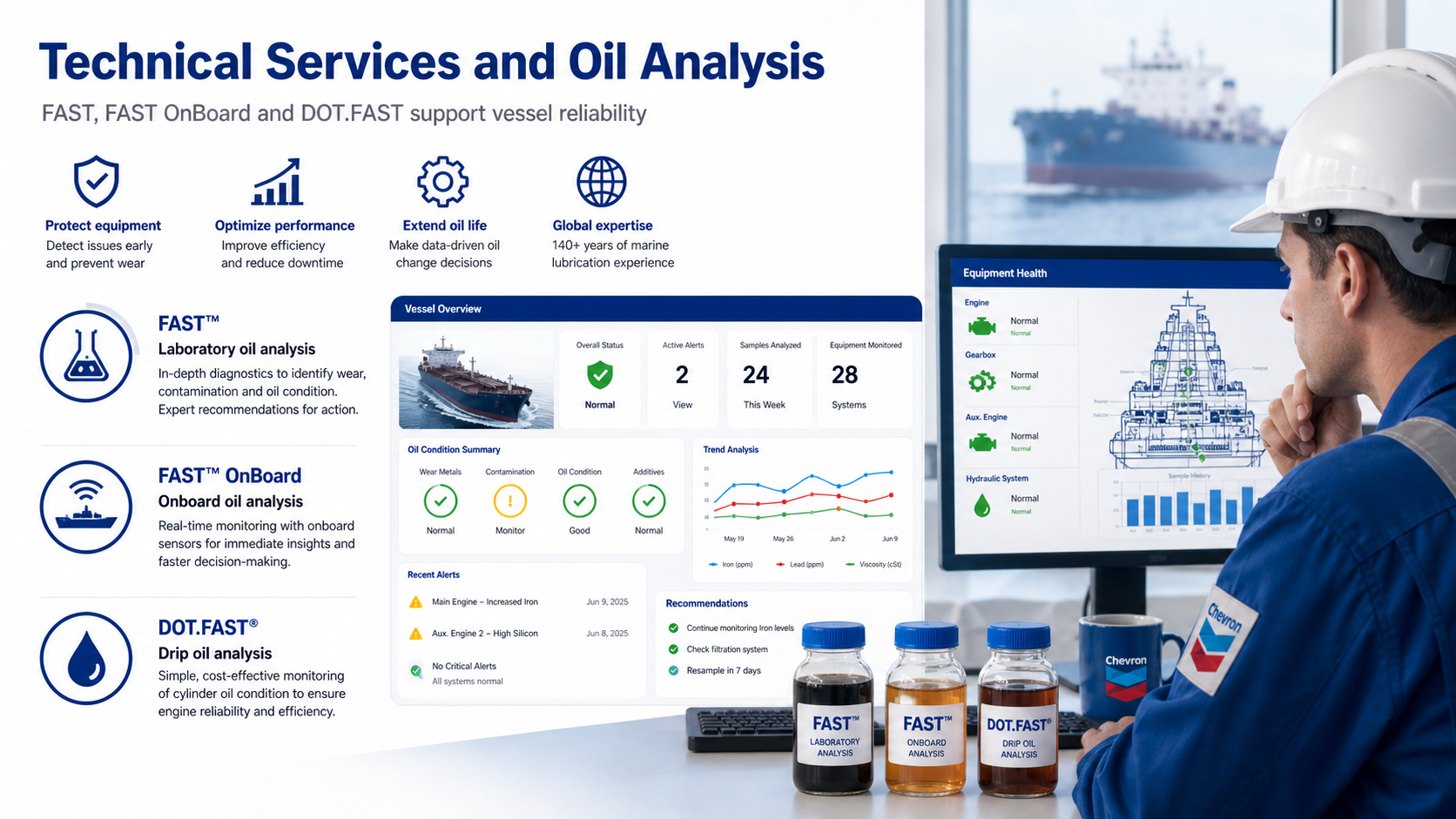
One of the important strengths of Chevron Marine Lubricants is that the offer is not limited to products. It also includes technical services that help operators monitor oil condition, detect early problems and optimize maintenance decisions.
FAST™ Lubricant Analysis
FAST™ is Chevron’s fluid analysis service for onboard equipment. It helps monitor the condition of oils used in engines, hydraulic systems, gearboxes, compressors, turbines and other lubricated components.
Through laboratory analysis and expert interpretation, FAST can help detect contamination, abnormal wear, viscosity changes, water ingress, additive depletion and other warning signs before they become serious failures.
FAST OnBoard
FAST OnBoard is a portable test kit designed for immediate onboard checks. It allows ship engineers to test important oil parameters such as water content, base number and viscosity without waiting for laboratory turnaround.
This supports faster decision-making at sea.
DOT.FAST® Drip Oil Analysis
DOT.FAST® is designed for used cylinder drain oil analysis in slow-speed two-stroke engines. It helps measure total iron content and supports the optimization of cylinder oil feed rates.
This is important because too little cylinder oil may increase corrosion and wear, while too much oil can increase deposits, waste lubricant and raise operating cost. DOT.FAST helps vessel operators find the right balance.
Benefits for Shipowners and Fleet Operators
Using the right Chevron Marine Lubricants program can support several operational benefits:
Improved engine and equipment protection.
Better control of wear, corrosion and deposits.
Reduced risk of unplanned downtime.
Optimized lubricant consumption.
Better support for low-sulphur and alternative fuel operations.
Longer equipment life.
More informed maintenance planning through oil analysis.
Improved fleet reliability across different ports and operating routes.
For large fleets, consistency is also important. A global marine lubricant supplier can help standardize product selection, technical support and supply availability across different vessels and trading areas.
Why Chevron Marine Lubricants Matter in a Lower-Emission Future
As the shipping industry moves toward lower sulphur, lower emissions and alternative fuels, lubrication becomes more technically complex. The lubricant must match not only the engine design but also the fuel chemistry, combustion conditions, operating profile and OEM requirements.
For example, a ship using VLSFO may need a different cylinder oil strategy than a ship using high sulphur fuel with a scrubber. A vessel operating on LNG or methanol may require different lubricant properties again.
This is why marine lubricant selection should be based on technical evaluation, not habit. Chevron Marine Lubricants are positioned to support this transition by offering a broad portfolio for different fuel routes, supported by oil analysis and technical recommendations.
Conclusion
Chevron Marine Lubricants provide a complete lubrication solution for the marine industry, covering engines, gearboxes, compressors, hydraulic systems, greases, cooling systems and technical monitoring services.
For shipowners, vessel operators and fleet managers, the value of a lubricant is measured not only by the oil itself, but by the protection, reliability and operational confidence it delivers. With a broad product range, technical services such as FAST™ and DOT.FAST®, and solutions for changing fuel requirements, Chevron Marine Lubricants help vessels operate more safely, efficiently and reliably in today’s demanding marine environment.
FAQ
What are marine lubricants used for?
Marine lubricants are used to protect engines, gearboxes, hydraulic systems, compressors, stern tubes and cooling systems onboard vessels.
What is Chevron Marine Lubricants?
Chevron Marine Lubricants is Chevron’s range of marine oils, greases, cooling water treatments and technical services for ships and offshore equipment.
What is DOT.FAST® drip oil analysis?
DOT.FAST® is a used cylinder drain oil analysis service that helps monitor iron wear and optimize cylinder oil feed rates in slow-speed two-stroke engines.
What is FAST™ oil analysis?
FAST™ is Chevron’s fluid analysis service that helps monitor lubricant condition, contamination, wear and equipment health.
Which marine equipment needs lubrication?
Main engines, auxiliary engines, gearboxes, hydraulic systems, compressors, stern tubes, turbines, deck machinery and cooling systems all require suitable lubrication or fluid protection.

Global Marine Lubricants Company Limited
Office: 328C Phan Dinh Phung, Cau Kieu Ward, Ho Chi Minh City, Vietnam
Tax Code: 0319412061
Email: sales@lubricantmarine.com
Hotline: +84 567 977 668
Website: lubricantmarine.com
© COPYRIGHT 2026 | GLOBAL MARINE LUBRICANTS Co., LTD